


I arrived in Banaras not as a traveller but as a question that had walked too far without an answer.
The city did not welcome me in the way places usually do. It absorbed me quietly, like an old truth that does not announce itself. The air felt dense with memory. Every lane seemed to remember more than it revealed, and every turn felt prewritten long before my arrival.
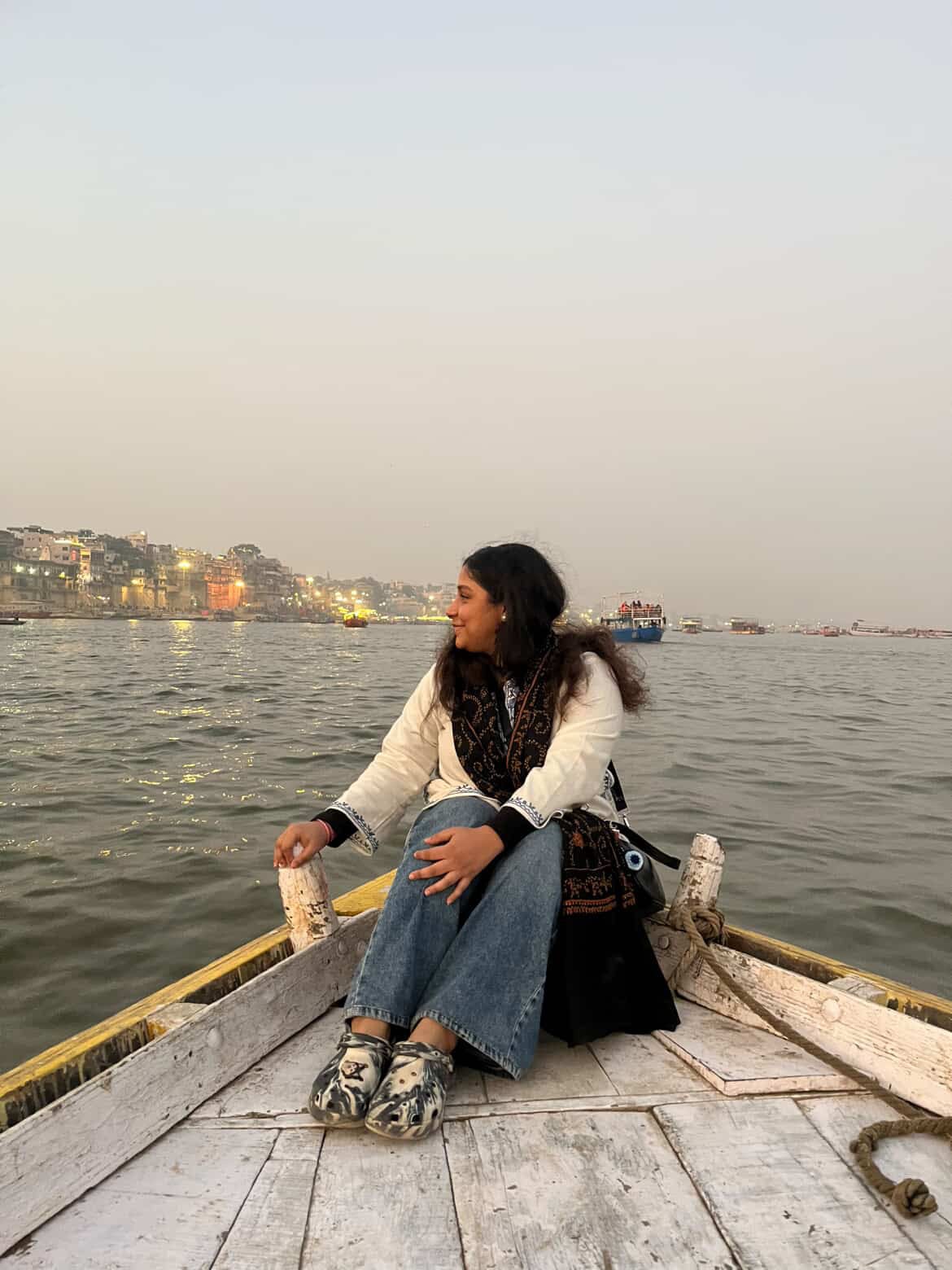
At dawn the Ganga appeared before me, not flowing but contemplating. She was restless yet composed, crowded with boats tied like unfinished thoughts along the ghats. Stone steps descended into her body like verses dissolving into silence, worn smooth by centuries of bare feet and surrendered burdens. Buildings leaned toward the river as if listening, their balconies holding plants, flags, and prayers with equal tenderness. Wires crossed the sky like hurried thoughts, reminders that even eternity must coexist with the present moment.
I touched the water and felt exposed rather than cleansed. The river did not purify me. She asked me what I had carried for so long that I feared setting it down. She accepted everything without commentary. Flowers, ashes, reflections, regrets. Like a mother who knows her children will return, she carried it all forward without judgment.
The ghats unfolded like a living manuscript. On one side lamps floated gently, trembling like hesitant hopes. On another side fire burned steadily, unapologetic, teaching the discipline of impermanence. Life and death were not opposites here. They were neighbours sharing the same rhythm. Smoke rose into the sky like letters returning to the cosmos, as if human lives were drafts sent back for correction.
I watched an old man sitting at the edge of the steps, staring at the river as though she owed him nothing and everything at once. His eyes were emptied of urgency. In that stillness I understood that Banaras does not grant liberation. It rehearses it daily. It teaches you to sit with contradictions until they stop arguing. Temples stood beside paan shops, chants tangled with traffic sounds, devotion breathed beside decay. Truth here was raw and unedited.
As evening descended, the city transformed rather than slept. Lamps bloomed along the ghats and Banaras seemed to float instead of stand. The river darkened but held the lights like memories learning how to glow. During the aarti, flames moved in disciplined circles, tracing invisible geometries in the air as if reminding the universe of its own order. Bells rang not to wake gods but to quiet the noise inside human beings.
Boats drifted slowly, silhouettes against gold and black water, like souls practicing the art of letting go. Reflections of fire shattered and reformed on the surface, teaching me how lives fracture with time yet never truly vanish. The city did not ask me to believe. It only asked me to witness honestly.
Walking back through the narrow lanes, I realized why Banaras is said to rest on Shiva’s trident. It stands suspended between worlds, refusing to fall entirely into either. It teaches you to die without dying, to live without clinging. I did not leave enlightened. I left lighter, carrying fewer illusions. The Ganga did not give me peace. She taught me how to sit beside chaos and still recognize the sacred.

Beautifully written